

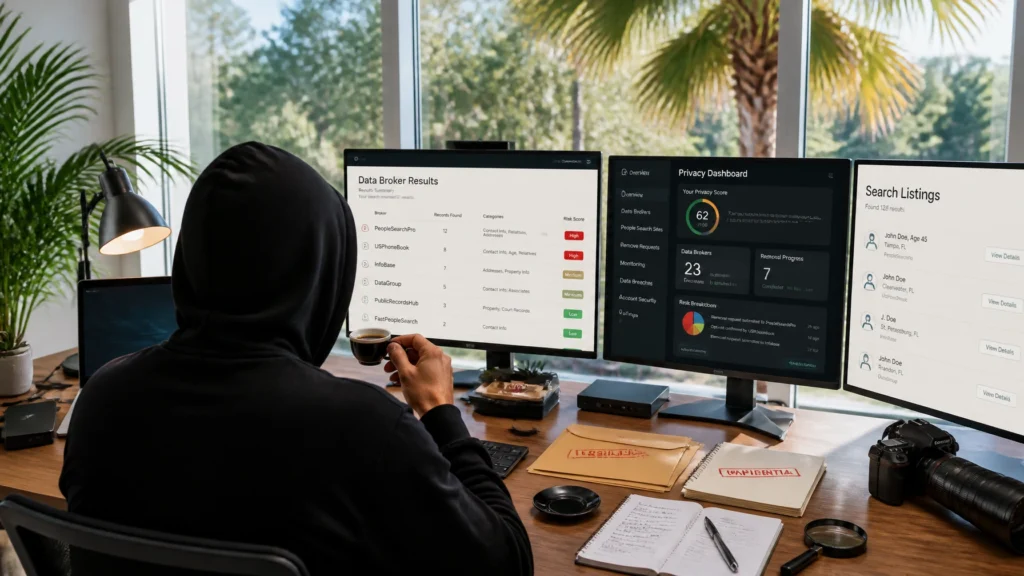
It was one of those humid Florida mornings where the air feels like a warm, damp blanket before you even step outside. I was sitting in the HQ, the office refrigerator giving off a new, rhythmic hum that sounded like it was trying to compose a jazz solo since the storm yesterday, staring at a stack of mail that the postman had just dropped through the slot.
I don’t get much "real" mail anymore. Most of it is junk: glossy flyers for lawn services I don’t need and credit card offers I’ll never sign. But one envelope caught my eye. It was addressed to:
Tracer GasStation Smith.
I chuckled and took a long sip of my triple-shot Espresso. I knew exactly who sent that. About six months ago, I had to give a name to a rewards program at a gas station chain just to get a discount on a car wash. I didn't want them having my real data, so I gave them a middle name that described exactly where I was.
"Caught you," I muttered to the empty room. By selling my data to this third-party marketing firm, that gas station chain had just confirmed they weren't worth my trust.
Being "The Man Who Wasn't There" isn't about being a ghost; it’s about being a strategist. In a world that constantly demands your personal details, the best defense is often a creative lie.
The gas station incident is a classic maneuver in my playbook. Most people think they have to be honest when a cashier asks for their name, or when a website requires a "First and Last Name" for a non-essential account. You don’t.
If you’re signing up for something that isn't a legal or financial document: think newsletters, retail rewards, or "free" Wi-Fi: try adding a tracker to your name.

For example, if you’re at Walmart, you’re Gary Walmart Thompson. If you’re signing up for a random tech blog, you’re Gary TechBlog Thompson.
When the spam starts rolling in: and it will: you’ll see exactly who leaked or sold your info. It’s the ultimate way to audit the companies you interact with. If you start getting mail from a predatory insurance company addressed to "Gary Walmart Thompson," you know exactly where the breach happened.
The data harvesting doesn't stop at your name. It gets much more invasive when you reach the "Security Questions" section of a website.
Here’s a secret that most people overlook: The computer doesn't know the truth. It only knows what you told it during setup.
When a site asks for my mother’s maiden name, I don’t give them the real one. Why would I? That’s a piece of high-value biological data that can be used to reset my bank password. If I give the same real answer to twenty different websites, and one of them gets breached, the hackers now have the "key" to all my other accounts.
Instead, I might tell them my mother’s maiden name is Mary Poppins.

Is it true? No. Is it secure? Absolutely. As long as I record that "Mary Poppins" is my answer for that specific site (usually in a secure password manager), I’m safer than the person telling the truth.
The goal is to disclose as little as possible. Treat security questions like a secondary password, not a trip down memory lane. If they ask for your first pet, tell them it was a "T-Rex." If they ask for your high school, tell them you went to "Hogwarts." The less real-world data you leave floating around, the harder you are to track.
Privacy isn't about hiding because you have something to fear; it’s about protecting your peace of mind. Whether it's using a fake middle name to track data brokers or lying to a website about where you went to school, you are taking control of your digital narrative.
At FindASpy.com, we see the fallout of oversharing every day. From GPS trackers hidden in cars to hidden cameras in supposedly private spaces, the threats are real. But the solutions start with your own awareness.
Don't let them have your truth if they haven't earned it.
Be smart, be skeptical, and stay vigilant.
Tracer here: I read every single comment, and I want to hear from our community. We’re building a network of people who refuse to be easy targets.
Drop your thoughts below. Let’s keep the conversation going and stay one step ahead, together.
We love hearing from you. If your comment is chosen as "Tracer's Pick," you might just receive a free spyware device from our team. I read every single post, so let’s talk.
Have your own hidden or suspicious gadget to share with the community? Upload it by clicking here.
Your vote helps determine FindASpy Insider’s Readers’ Top Picks. One rating is allowed per reader for each article.
Today’s Coffee Conversation
Tracer shares cybersecurity stories, scam alerts, privacy tips, and investigative insights. Pull up a chair, share your experience, and help shape tomorrow’s discussion.