

Thursday morning at FindASpy.com headquarters in Florida always starts with a familiar ritual.
The aroma of freshly brewed French press coffee fills the air. I reached for my usual filing cabinet drawer to grab the morning logsheets, and the handle came off in my hand. Not a stuck drawer this time. The entire handle. Another day in paradise.
As I poured my first cup of dark roast, I opened our secure inbox. Among the usual dispatch reports and equipment orders was an email from a reader in Ohio that immediately caught my attention.
"Tracer," she wrote, "I’ve always guarded my wallet with my life. I never carry my physical Social Security card, I shred every piece of mail, and I've never fallen for a phishing email. Yet last week, I received a collections notice for a credit card opened in my name across three states. How did they get my exact number if I never gave it away?"
It’s a question we hear more often than you might think. Many people believe that if they keep their physical card locked in a home safe, their Social Security Number (SSN) is untouchable. But in the modern digital ecosystem, hackers don't always need to steal your card or hack the government. Often, they construct your number using mathematical logic, public records, and social engineering.
Welcome to our ongoing series, Morning Coffee with Tracer. Today, we are breaking down how cybercriminals reverse-engineer one of your most sensitive identifiers, how pre-2011 issuance patterns make older numbers vulnerable, and what you can do right now to lock down your identity.
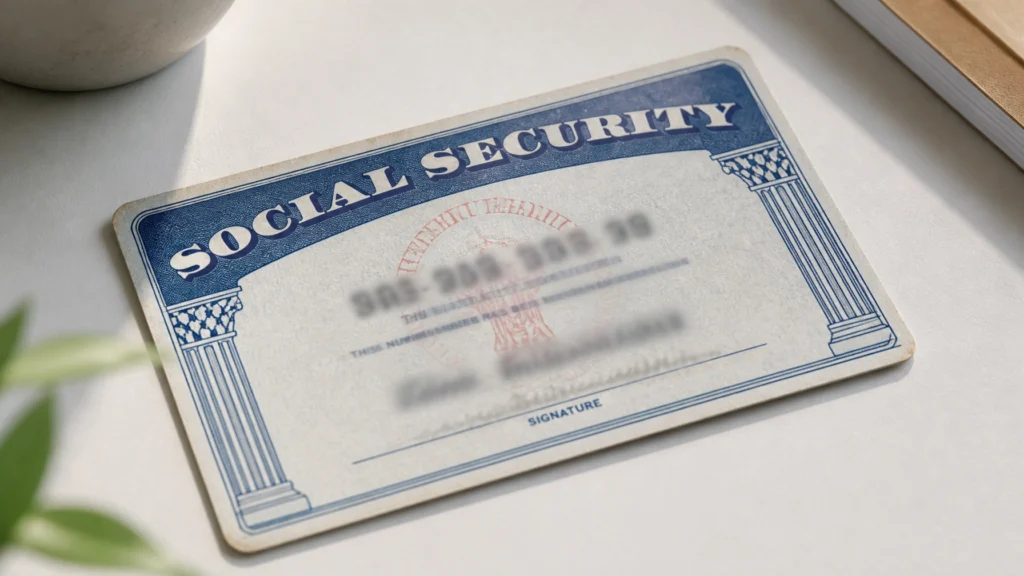
To understand how hackers piece together your SSN, you first need to understand how the Social Security Administration (SSA) historically structured those nine digits: AAA-GG-SSSS.

Every standard SSN is broken down into three distinct blocks:
While the SSA introduced SSN randomization on June 25, 2011: meaning numbers issued after that date no longer encode geographic or chronological data: hundreds of millions of adults in the workforce still carry pre-2011 numbers tied directly to these predictable regional rules.
When a fraudster targets an individual, they rarely guess blindly. Instead, they use a methodical three-step process combining public data, social engineering, and custom software.
If a hacker knows your city and state of birth: information easily pulled from public birth records, genealogy sites, or your LinkedIn profile: they can immediately narrow down your possible Area Numbers.
For example, if you were born in Illinois, your pre-2011 Social Security number almost certainly falls within specific area ranges allocated to that state (such as 318–361).
Here is a reference of historical area number ranges across major regions:
| Area Range | State / Issuing Jurisdiction |
|---|---|
| 001–003 | New Hampshire |
| 004–007 | Maine |
| 008–009 | Vermont |
| 010–034 | Massachusetts |
| 035–039 | Rhode Island |
| 040–049 | Connecticut |
| 050–134 | New York |
| 135–158 | New Jersey |
| 159–211 | Pennsylvania |
| 212–220 | Maryland |
| 221–222 | Delaware |
| 223–231 | Virginia |
| 232–236 | West Virginia |
| 237–246 | North Carolina |
| 247–251 | South Carolina |
| 252–260 | Georgia |
| 268–302 | Florida |
| 318–361 | Illinois |
| 400–407 | Kentucky |
| 424–432 | Tennessee |
| 525–585 | Texas |
| 586–595 | California |
By identifying your birthplace, a hacker instantly eliminates roughly 99% of all possible area combinations.
While the first three digits give them your region, the last four digits are the most crucial piece of the puzzle. How do criminals get them? They don't usually steal them from a breach: they simply ask for them.

Through sophisticated social engineering, phishing calls, fake customer service inquiries, or compromised business vendor databases, fraudsters trick people into verifying their identity by providing "just the last four digits" of their SSN. Because society has normalized giving out the last four digits for medical check-ins, utility verification, and banking, people hand them over willingly.
Once a hacker has your likely Area range and your exact Serial numbers (the last 4 digits), they are left with only the middle 2 digits (Group numbers) to figure out.
To bridge this gap, cybercriminals use custom scripts known as "tumblers." These automated tools generate every possible permutation of the middle two digits within your state's valid historical issuance range. The script then automatically cross-references these generated numbers against unsecured or poorly protected online verification portals: such as credit card pre-qualification sites, payroll employee portals, or medical billing networks: until one of them triggers a successful match.
Boom. The full 9-digit number is reconstructed.
We don't share this mechanics breakdown to cause panic; we share it to empower you with awareness. Knowledge is your strongest defensive perimeter.
Here is your Coffee Challenge for this week:
To learn more about who we are and our commitment to personal safety, visit our about us page. You can also catch up on previous investigations in our Morning Coffee archive.

Disclaimer: The stories Tracer shares are based on real scams and security threats actively targeting our community. While the names and specific scenarios are crafted to protect identities, these tactics are a matter of when, not if. Tracer brings these to you fresh — so you see it here before it shows up at your door.
What state were you born in, and did you realize how much geographic data old Social Security numbers used to encode? Have you ever frozen your credit bureaus, or is this your first time taking that step?
Drop a comment below: I read every single response personally. And if you’ve recently encountered a suspicious device, tracker, or strange gadget, remember you can upload your own hidden device to share with our community by clicking here.
Need immediate, confidential assistance or discreet investigative support? Call Patricia directly at 321-342-0040. We’ve got your back.
Your vote helps determine FindASpy Insider’s Readers’ Top Picks. One rating is allowed per reader for each article.
Today’s Coffee Conversation
Tracer shares cybersecurity stories, scam alerts, privacy tips, and investigative insights. Pull up a chair, share your experience, and help shape tomorrow’s discussion.