

Good morning, community. Grab your mug, pull up a chair, and let’s dive into today’s intelligence briefing.
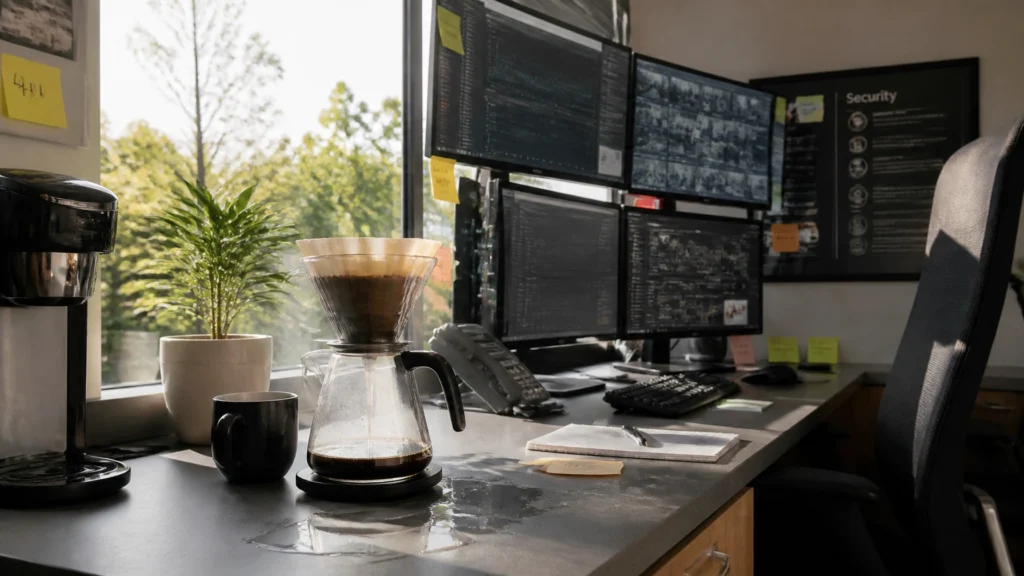
Monday morning at FindASpy HQ started with a minor office hazard that definitely kept me awake. While reviewing overnight alert logs, I heard a rhythmic drip… drip… drip… coming from the kitchenette counter. The office coffee maker decided to leak a small, persistent puddle directly onto the laminate surface right next to my freshly ground beans. Forget last week’s AC condensate leak: today’s battle is with a malfunctioning water reservoir.
Fortunately, my backup pour-over coffee setup saved the morning. With a glass carafe, a conical dripper, and hot water poured at precisely the right temperature, I’ve got a clean, aromatic brew in hand. Surrounding my monitors are dozens of bright sticky notes tracking recent threat reports, counter-surveillance inquiries, and active device investigations. Among them is a fascinating dispatch sent in by one of our vigilant community members down in Tampa, Florida.
A community member who frequently travels along the I-4 corridor stopped at a busy suburban gas station in Tampa to fill up their tank. Everything looked normal at a glance: until they reached for the card reader.
Before inserting their chip card, our reader applied a habit we preach in every briefing: they gave the bezel a firm tug.
Instead of staying locked in place, the entire plastic card-reader faceplate slid right off in their hand, revealing a hidden Bluetooth skimming circuit board wired directly behind the facade.
It was a classic overlay skimmer: an exact plastic mold designed to clip seamlessly over the legitimate terminal, intercepting magnetic stripe data and capturing keystrokes while transmitting the stolen details wirelessly to a criminal parked nearby.

Skimmers have evolved far beyond the clumsy, bulky boxes of a decade ago. Today’s threat landscape relies on precision engineering, micro-electronics, and social engineering to steal your financial identity in seconds. Let's break down how these devices operate across different environments:
At outdoor fuel dispensers, criminals use two main vectors:
ATMs remain prime targets due to high cash volume.
In hospitality and dining settings, dishonest employees sometimes use pocket-sized skimmers. When you hand over your card to pay the bill, the server slides it once through the stationary POS terminal, and then a second time through a palm-sized skimmer hidden in an apron pocket. In less than two seconds, your card data is duplicated.
Staying protected doesn't mean living in fear; it means building defensive habits that become second nature. Whenever you are fueling up or making a transaction, incorporate these four non-negotiable rules:

If you frequently travel, shop online, or worry about recurring subscription risks and overseas exposure, there is another powerful countermeasure you should discuss with your bank: Controlled Purchase Cards (often called virtual credit cards or cards with strict spending limits).
Many major financial institutions and modern fintech platforms allow you to generate secondary digital or physical card numbers tied to your primary account with custom restrictions:
To explore professional counter-surveillance tools, vehicle sweeps, and personal security hardware, check out our FindASpy Services and browse our complete catalog of investigative equipment.

Skimmers succeed because people rush. They are designed to blend into the background of everyday life, exploiting routine and distraction. By slowing down for five seconds before every transaction, you break the attacker's workflow.
Tomorrow, we are looking at how public databases and online directories expose more than you think in The Internet Never Forgets What You Upload. Stay sharp out there.
Disclaimer: The stories Tracer shares are based on real scams and security threats actively targeting our community. While the names and specific scenarios are crafted to protect identities, these tactics are a matter of when, not if. Tracer brings these to you fresh — so you see it here before it shows up at your door.
What state are you reading from today, and have you ever personally encountered a suspicious card reader or ATM skimmer in your local area? Drop your stories in the comments below: I read every single post.
If you have discovered a suspicious hidden device, gadget, or tracker in your environment, don't keep it to yourself. Upload your findings to help protect our entire network by clicking here.
Need immediate, confidential assistance or suspect you are being monitored? Reach out to our licensed investigative team directly at 321-342-0040.
Don't forget to check out our ongoing archive for past briefings, and check out this week's Tracer's Pick on our main page — one lucky reader takes home professional counter-surveillance gear.

Your vote helps determine FindASpy Insider’s Readers’ Top Picks. One rating is allowed per reader for each article.
Today’s Coffee Conversation
Tracer shares cybersecurity stories, scam alerts, privacy tips, and investigative insights. Pull up a chair, share your experience, and help shape tomorrow’s discussion.