


Hidden cameras explained: legality, detection methods, and everything you need to know about spy cameras in 2026. Your complete guide.
Look, I’m not going to sugarcoat it, we live in a world where hidden cameras are everywhere. From the Airbnb you just booked to the office conference room where you had your performance review, these tiny surveillance devices have become as common as smartphones. And honestly? That reality is both fascinating and slightly terrifying.
I remember the first time I discovered a hidden camera. It was disguised as a smoke detector in a hotel room, and I only spotted it because the LED indicator blinked at an odd interval. That moment changed everything, suddenly, I became hyperaware of every alarm clock, USB charger, and wall outlet around me. Welcome to modern life, where paranoia meets practical security concerns.
But here’s the thing: hidden cameras aren’t inherently evil. They’re tools. Like any tool, they can protect your home, help you catch a dishonest contractor, or keep an eye on your elderly parent’s caregiver. They can also invade privacy in deeply troubling ways. Understanding this technology isn’t optional anymore, it’s essential.
So let’s dive into everything you need to know about hidden cameras in 2026. I’ll walk you through the legal maze, show you how to spot these devices, recommend the best products (and yes, some are surprisingly clever), and answer the questions that keep you up at night. By the end, you’ll be equipped to navigate this surveillance-saturated world with confidence.
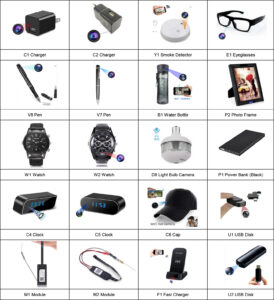
Hidden cameras—also called spy cameras, covert cameras, or mini cameras, are recording devices designed to be concealed or disguised as everyday objects. Unlike your standard security camera that announces its presence with a big lens and blinking lights, these devices blend seamlessly into their environment.
The technology has evolved dramatically. Twenty years ago, a “hidden” camera was still bulky and obvious to anyone paying attention. Today? We’re talking about devices smaller than a quarter that can shoot in 4K resolution with night vision capabilities. Some wireless spy cameras can livestream footage to your phone from anywhere in the world. Others record to a microSD card, requiring no internet connection whatsoever.
The variety is staggering. You’ve got:
The question isn’t whether this technology exists, it’s how you’re going to use it (or protect yourself from it).

Alright, let’s tackle the elephant in the room. Are hidden cameras legal in the US?
The short answer: It depends. I know, I know, you wanted a simple yes or no. But the reality is more nuanced, and understanding these nuances could save you from serious legal trouble.
US law generally allows you to use hidden cameras in your own property, with one massive caveat: you cannot record in places where people have a reasonable expectation of privacy. This includes:
I can record my living room, kitchen, or home office without telling anyone. But the moment I point a camera at someone’s sleeping quarters or bathroom, I’ve crossed a line that could land me in criminal court.
Here’s where things get really tricky. Do hidden cameras record audio, and is it legal?
Many modern spy cameras include audio recording capabilities, but audio surveillance has stricter rules than video. The US has a patchwork of consent laws:
This means your hidden camera clock that records audio could be perfectly legal in Texas but a felony in Illinois. I always recommend disabling audio recording unless you’ve verified your state’s laws or obtained consent.
Can I legally record a nanny or caregiver in my home?
Yes, generally speaking. You have the right to monitor what happens in your own home, including caregivers’ interactions with your children or elderly relatives. However:
What about recording employees?
This gets complicated fast. Many states require employers to notify employees about surveillance. Some require consent. Federal wiretapping laws apply if you’re recording audio. My advice? Consult an attorney before installing workplace surveillance.
Use hidden cameras on your property, in public-facing areas, without audio recording (or with proper consent), and never in private spaces. When in doubt, consult a lawyer. A $200 legal consultation beats a $10,000 lawsuit any day.
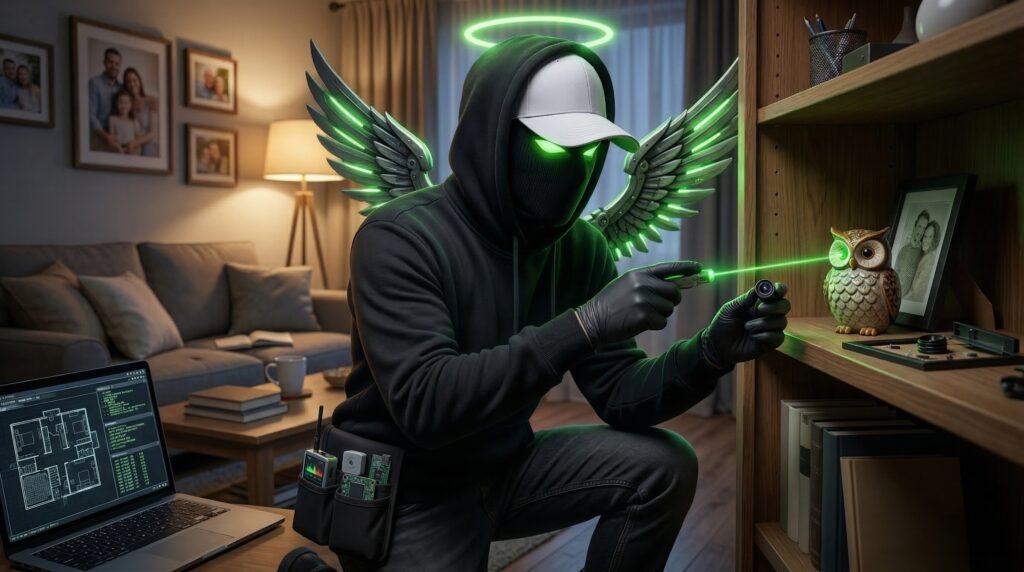 Now we’re getting to the paranoid part—but honestly, it’s healthy paranoia. Whether you’re checking an Airbnb, a hotel room, or even your own office, knowing how to spot hidden cameras is a valuable skill.
Start with the obvious. Where are the most common places hidden cameras are concealed?
Based on my research and talking with security professionals, these are the top hiding spots:
Look for these telltale signs:
Here’s a simple trick: turn off all the lights and use your phone’s flashlight to scan the room slowly. Camera lenses reflect light distinctively, you’ll see a small glint or reflection if there’s a lens present. It’s not foolproof (some cameras have anti-reflection coatings), but it catches many hidden cameras.
Your phone’s camera can actually detect some hidden cameras. Many spy cameras use infrared LEDs for night vision, which are invisible to the human eye but visible to your phone’s camera. Turn off the lights, open your phone’s camera, and scan the room. You might spot small bright spots that indicate infrared lighting.
Are camera finder apps reliable though?
Honestly? Mostly not. I’ve tested several apps claiming to detect hidden cameras through your phone’s sensors, and the results are inconsistent at best. They generate tons of false positives, flagging every electronic device in the room. However, apps that help you scan for unusual WiFi networks can be useful—many wireless spy cameras create their own networks or connect to existing ones.
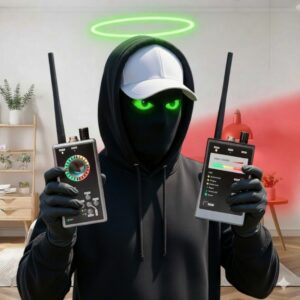
For serious detection needs, consider dedicated tools. How do hidden camera detectors work?
Sometimes the simplest methods work best. When checking a hotel or Airbnb:
When shopping for hidden cameras, marketing hype can be overwhelming. Let me break down what actually matters.
What video resolution is best for a covert camera—1080p vs. 4K?
For most purposes, 1080p is perfectly adequate. It clearly identifies faces, captures license plates at reasonable distances, and doesn’t fill up storage as quickly. However, 4K becomes valuable when:
The trade-off? 4K files are massive. A 32GB memory card that holds 8 hours of 1080p footage might only store 2-3 hours of 4K. Battery drain is also significantly higher with 4K recording.
My recommendation: Choose 4K for stationary, AC-powered cameras where storage isn’t limited. Stick with 1080p for battery-powered or portable devices where runtime matters more than ultimate resolution.
Do hidden cameras need Wi-Fi to work?
Absolutely not—and this is a common misconception. Hidden cameras fall into two categories:
WiFi-enabled wireless spy cameras:
Standalone models with local storage:
Neither is inherently better—it depends on your needs. I use WiFi cameras for real-time monitoring situations (like checking on my dog during the workday) and standalone cameras for situations where connectivity is unreliable or I’m concerned about digital security.
What is the typical battery life of a small, wireless spy camera?
This varies wildly based on usage patterns. Here’s what’s realistic: On a small Body-Worn Camera like these Spy Camera Glasses it’s about 1.5 hours.

Battery capacity increases with device size—there’s no way around physics. Those tiny spy pen cameras sacrifice runtime for portability. Larger disguised cameras (clocks, speakers) can include bigger batteries and last substantially longer.
For long-term monitoring, I always recommend AC-powered options or cameras with motion detection to extend battery life dramatically.
Most modern hidden cameras include night vision using infrared LEDs. However, quality varies enormously. Look for:
Cheap cameras often have terrible night vision—grainy, short-range, and nearly useless for identification. Test night vision immediately after purchase if possible.
Yes, with spy camera apps, you can turn an old smartphone into a surveillance device. Apps like Alfred Camera or AtHome Camera work surprisingly well for free. The downsides? Phone cameras aren’t designed for covert placement, battery life is mediocre, and the device is obviously a phone. Still, it’s a zero-cost way to test whether you actually need dedicated equipment.
The smallest cameras available to consumers are around 0.5 inches cubed—roughly the size of a large die. Professional-grade miniature cameras can be even smaller, though image quality and battery life suffer significantly. The smallest camera with decent performance is probably the 1-inch category, which balances size with functionality.
For WiFi cameras, range depends on your router and obstacles. Most work within 50-100 feet with standard home routers. For dedicated wireless systems with separate receivers, ranges can extend to 300+ feet in ideal conditions, though walls and interference dramatically reduce this.
Yes, selling hidden cameras is legal in the US. What’s restricted is how you use them. Manufacturers can’t control whether buyers use products legally or illegally, just as knife manufacturers aren’t responsible for stabbings.
Look, I’ve avoided getting too preachy, but we need to talk about this. Hidden cameras are powerful tools that can easily be abused.
I believe strongly in your right to monitor your own property and protect your family. Recording a caregiver in your living room? Absolutely reasonable. Setting up cameras to investigate suspected theft in your business? Legitimate use.
But recording someone in a bedroom without consent? Placing cameras in Airbnb rentals without disclosure? Using hidden cameras to spy on a spouse or partner? That’s not security—it’s violation, and it’s often illegal.
Before deploying any hidden camera, ask yourself:
Technology isn’t moral or immoral—we are. Use it responsibly.
Given how prevalent hidden cameras have become, everyone should have basic detection capabilities. Here’s my recommended protection strategy:
For Regular Travelers:
For High-Risk Situations:
For Everyone:
Where is this technology heading? Based on current trends:
Smaller and More Powerful: Cameras will continue shrinking while resolution increases. We’re approaching a point where cameras smaller than a pencil eraser will shoot in 4K.
AI Integration: Expect motion detection to evolve into intelligent person recognition, unusual activity detection, and automated alerting for specific events.
Better Disguises: As detection methods improve, manufacturers will develop more sophisticated disguises. The arms race between surveillance and counter-surveillance will intensify.
Regulatory Response: I anticipate more states passing disclosure requirements for hidden cameras, particularly in rental properties and workplaces. The legal landscape will continue evolving.
Privacy Technologies: Just as surveillance improves, so will counter-surveillance. Expect better detection tools, privacy-protecting clothing and accessories, and possibly even personal anti-surveillance technology.
Here’s what I want you to take away from this exhaustive guide:
Hidden cameras are neither purely good nor purely evil—they’re tools that reflect the intentions of their users. They can protect your family, secure your property, and document wrongdoing. They can also invade privacy in deeply harmful ways.
Understanding this technology doesn’t make you paranoid—it makes you informed. Knowing how to detect hidden cameras doesn’t mean you should obsess over every hotel room, but it does mean you can check when something feels off. Learning about legitimate surveillance uses doesn’t give you license to violate privacy laws, but it does help you make intelligent security decisions.
The surveillance landscape is complex, constantly evolving, and sometimes uncomfortable to contemplate. But ignorance isn’t protection. Knowledge is.
Whether you’re considering purchasing a nanny cam to monitor childcare, concerned about privacy in an Airbnb, or simply curious about this technology that’s become so prevalent in modern life, you now have the information to navigate these waters confidently and responsibly.
Stay informed. Stay legal. And maybe check that smoke detector one more time.
If you found this guide helpful, bookmark it for future reference—trust me, you’ll want to revisit specific sections as situations arise. Have questions I didn’t cover? Drop them in the comments. And if you’ve had experiences with hidden cameras (for security or privacy concerns), share your story. Our collective knowledge makes us all more informed.
I bet you’ll be looking at your Airbnb rental with a whole new perspective.
Disclaimer: This article is for informational purposes only and does not constitute legal advice. Laws regarding surveillance and recording vary by jurisdiction. Consult a qualified attorney before using surveillance equipment in any situation where legality is unclear.

Your vote helps determine FindASpy Insider’s Readers’ Top Picks. One rating is allowed per reader for each article.