

Tracer’s morning began with a small disaster.
The headquarters coffee machine accepted his dollar, displayed “BREWING,” made three heroic clicking sounds, and printed a receipt for a beverage that never existed.
“Excellent,” Tracer said, holding the empty cup. “Even the coffee machine is selling imaginary products.”
Then his phone rang.
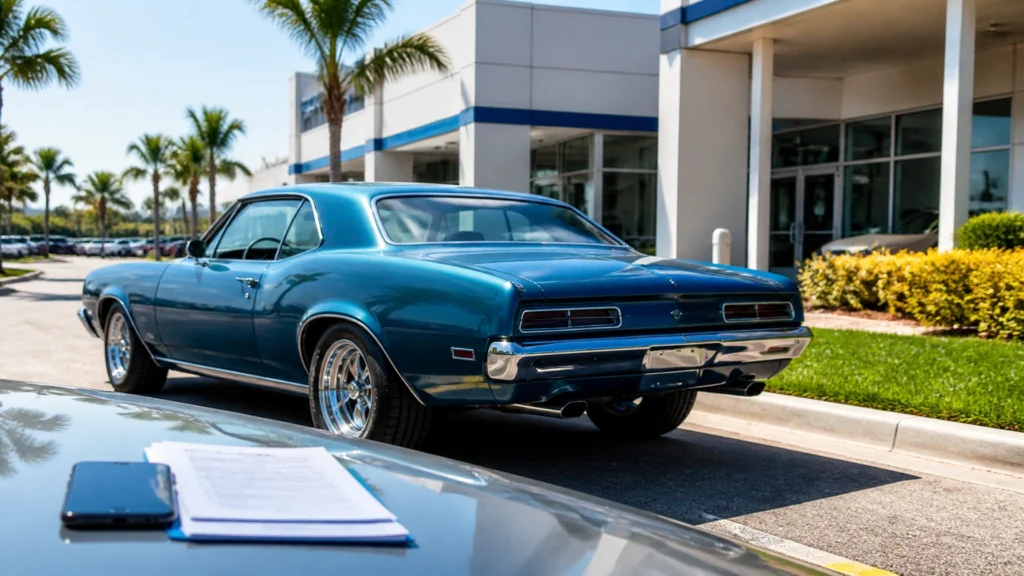
A buyer had driven across Florida to collect a rare classic car. The vehicle had been listed on a dealership website that looked completely legitimate. It displayed real logos, professional photographs, glowing testimonials, detailed purchase instructions, and a flexible return policy.
The buyer had already wired a deposit.
But when he arrived at the real dealership, the manager had no record of the order. No payment. No vehicle. No appointment.
The website was a clone.
This is the latest warning from the Federal Trade Commission. In its September 1, 2026 consumer alert, the FTC explained that scammers are spoofing car dealership websites, often using artificial intelligence to copy the appearance and language of real dealers.
The result is a polished digital showroom selling cars the criminals do not own.
The scam follows a simple pattern, even when the website looks sophisticated.
First, criminals copy a legitimate dealership’s website. They duplicate the dealership’s logos, colors, vehicle listings, photographs, staff information, and sales language. Some add fake testimonials written to sound like satisfied customers.
Artificial intelligence makes this process faster and more convincing. A scammer can use copied images and automated writing tools to build a site that appears established, professional, and trustworthy.
Then the criminals add vehicles that create emotional urgency.
Rare muscle cars and hard-to-find classics are especially effective bait. A buyer may have searched for a specific model for years. The listing may show the exact color, engine, trim, and year the buyer wants.
The scammer describes a detailed buying process. They may offer shipping, flexible returns, buyer protection, and answers to common questions. Every detail is designed to lower the buyer’s suspicion.
Then comes the payment request.
The fake dealer insists that the buyer send a deposit before the vehicle can be reserved. Wire transfer is often the preferred method because it moves quickly and is difficult to reverse.
Once the money arrives, the scammer disappears: or sends more excuses and requests for additional payments.

Remote vehicle purchases are not automatically dangerous. Legitimate dealerships sell cars online every day.
The problem is that remote transactions remove several protections a buyer normally receives in person.
When you visit a dealership, you can confirm that the building exists. You can speak with staff. You can inspect the vehicle. You can compare the vehicle identification number, or VIN, with the paperwork. You can ask questions that are difficult for a fake seller to answer.
A remote buyer may see only a website, email address, phone number, and a collection of photographs. Every one of those items can be copied.
Distance also creates pressure. A Florida buyer may be looking at a vehicle in another part of the state, across the country, or from a dealer several hours away. The scammer uses that distance as an advantage:
The buyer is encouraged to trust the process instead of verifying the seller.
That is the moment to slow down.
The buyer in Tracer’s case did not discover the problem from a broken link or an obvious spelling mistake.
The site looked professional.
The photographs looked authentic.
The reviews looked positive.
The problem surfaced when the buyer walked into the real dealership and asked for the car by its listing number.
The manager searched the dealership’s system. There was no matching vehicle. No purchase order existed. No deposit had arrived. The real dealership had been impersonated.
This is an important lesson: glowing reviews may belong to the legitimate dealership that criminals copied. Searching the dealership name and seeing positive reviews does not prove that the website you visited is genuine.
You must verify the specific seller, website address, vehicle, and payment instructions.
Before sending money, complete each step below. Do not skip steps because the car is rare or the price is attractive.
Search the dealership’s name with words such as:
Read independent results carefully. Confirm that the reviews refer to the exact dealership, physical location, phone number, and web address you are using.
A scam website may use the name of a real dealer while directing you to a different domain.
Find the dealership through a trusted map service, state business record, manufacturer dealer directory, or another independent source.
Do not use only the phone number or email address shown on the suspicious website. Contact the dealership through information obtained independently.
Ask a direct question:
“Is this your website, and do you own this vehicle?”
Ask the employee to confirm the exact listing, VIN, stock number, and sales contact.
The FTC advises buyers to see both the dealership and the vehicle in person before paying.
Inspect the car. Check that the VIN on the vehicle matches the VIN on the title and sales paperwork. Ask for maintenance records and ownership documents. Do not rely on photographs alone.
A stolen photograph may show a real car that is somewhere else.
If the vehicle is too far away, tell the seller that you want to hire a mobile inspection service.
The inspector should be independent. Do not use a service selected only by the seller.
The inspection should confirm that:
If the seller refuses, creates repeated delays, or says an inspection is unnecessary, walk away.

Walk away from any dealer who insists on an upfront payment by wire transfer only.
A wire transfer is not proof that a seller is legitimate. It is simply a payment method. Once the money is sent, recovery may be difficult.
Never allow a countdown, scarcity claim, or emotional attachment to override verification.
Florida is home to major collector-car communities, long-distance buyers, seasonal residents, and sellers who regularly ship vehicles between cities and states. That makes remote purchases common: and gives criminals a believable reason to say the buyer cannot inspect the car immediately.
Florida buyers should be especially careful with older vehicles because title history, flood damage, rebuilt status, and previous storage conditions may require additional investigation.
A vehicle-history report is useful, but it does not prove that the person selling the car owns it. It also does not prove that the website belongs to the dealership named on the page.
Verify the seller first. Verify the vehicle second. Verify the payment process third.
For help documenting a suspicious website, message, payment request, or possible digital compromise, you can contact the FindASpy team and avoid sending passwords, banking details, Social Security numbers, or other sensitive information through an unverified channel.
Act immediately.
Do not pay a second “recovery company” that promises to retrieve your money for an upfront fee. Fraud victims are often targeted again by criminals claiming they can recover lost funds.
A professional website is not proof of a professional seller.
A real logo is not proof of a real dealership.
A convincing review is not proof of a real transaction.
Before you wire money for a rare vehicle, independently verify the dealership, inspect the car, confirm the VIN, and use a payment process that gives you meaningful protection. If the seller refuses reasonable verification, the dream car is not worth the risk.
The safest buyer is not the fastest buyer.
The safest buyer is the one who stays one step ahead.
Have you ever found a vehicle, rental, ticket, or high-value item online that looked legitimate but raised questions when you investigated it?
What State are you from? Would you insist on an in-person inspection, hire a mobile inspector, or walk away if the seller demanded a wire transfer?
Tracer reads all posts, and your experience may help another member of our community recognize the warning signs sooner. You can also upload your own hidden gadget or suspicious finding to share with the FindASpy community by clicking here.
🟩 Meet Sterling Reed – "TRACER"
Your vote helps determine FindASpy Insider’s Readers’ Top Picks. One rating is allowed per reader for each article.
Today’s Coffee Conversation
Tracer shares cybersecurity stories, scam alerts, privacy tips, and investigative insights. Pull up a chair, share your experience, and help shape tomorrow’s discussion.