

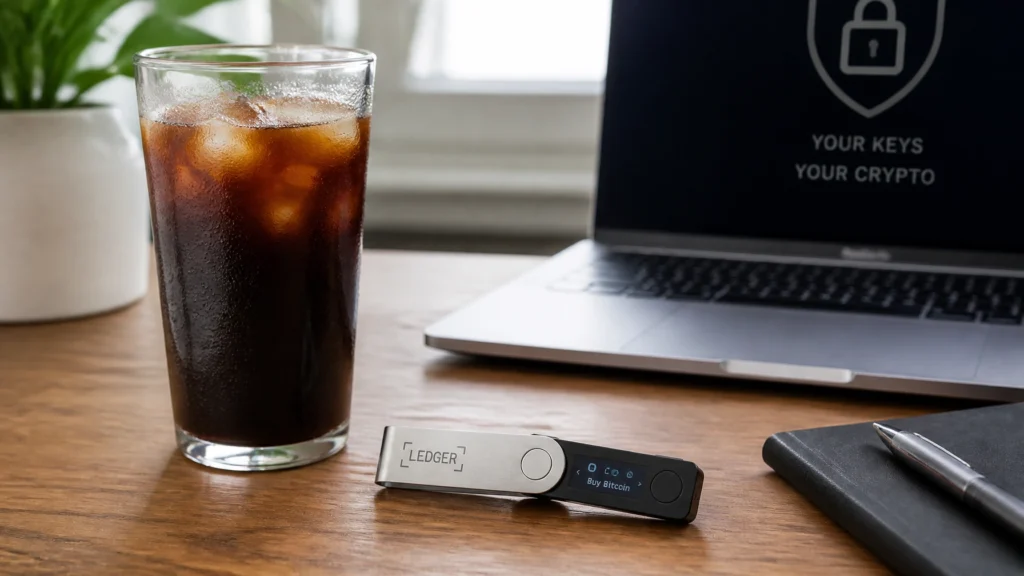
It’s Friday morning at FindASpy.com headquarters, and the office coffee maker is staging a quiet rebellion. The gasket is worn out, and now a thin line of water is creeping across the break room counter one slow drip at a time. Someone has shoved a stack of paper towels under the machine in a losing battle to keep the mess contained. I’m leaning back in my chair, staring at a monitor plastered in neon sticky notes while taking a slow pull from my stainless steel tumbler of cold brew. Ice clinks against the metal. It’s crisp, smooth, and desperately needed.
Because the digital world didn’t take a day off, and neither did the threat actors.
Yesterday morning, my inbox lit up with a Community Finds submission that stopped my coffee mug halfway to my mouth. A reader named Dave from Tampa, Florida, reached out with a heartbreaking story: he lost $12,000 in Bitcoin from a hardware wallet he had trusted for years. He bought it sealed in plastic, locked it in a fireproof safe, and assumed his crypto was untouchable.
He was wrong. And he wasn’t alone. Across the globe, approximately $38 million in Bitcoin vanished in a matter of minutes from wallets manufactured by Coinkite under the Coldcard brand. How did an offline, hardware-isolated device become an open door for thieves?
Let’s dissect the anatomy of a $38 million mistake.
We’ve all been told the golden rule of cryptocurrency: Not your keys, not your coins. For years, hardware wallets have been preached as the ultimate fortress against online thieves, malware, and remote exchange hacks. By keeping your private keys offline on a dedicated physical device, you isolate your digital wealth from the chaotic internet.
So how did attackers manage to sweep roughly 594 BTC from roughly 500 single-signature wallets in a lightning-fast 25-minute window?
The vulnerability didn’t come from a remote zero-day exploit over the blockchain. It came from deep inside the device’s own firmware code: specifically, how random numbers were generated at the factory.

To understand how thieves managed to recreate private keys out of thin air, we need to look at how a hardware wallet actually creates your seed phrase (the 12-to-24-word recovery backup).
When a secure hardware wallet initializes, it needs a source of pure, unadulterated randomness: known in cryptography as entropy. Normally, this is generated using a hardware random number generator (RNG) built directly into the silicon chip.
Here is where the engineering disaster struck:
MICROPY_HW_ENABLE_RNG) was inadvertently set to 0. The hardware random number generator was silently disabled.For Mk3 devices on affected firmware, this dropped the seed entropy from a bulletproof 128 bits down to a meager 40 bits. In cryptographic terms, that reduced an astronomically impossible guessing game down to a search space that sophisticated attackers could brute-force offline using specialized hardware. Once they guessed the predictable seed math, they could mathematically recreate the private keys and drain the wallets remotely.
Grab your phone or pull up your desktop wallet. I’ll wait.
If you own or have ever initialized a hardware wallet, you need to audit its history immediately. Security isn’t just about what device you hold in your hand today; it’s about the software state of the device on the exact day you generated your seed phrase.

Take these steps right now:
We can’t change yesterday’s blockchain transactions, but we can bulletproof your operational security starting right now. Here is your three-step Coffee Challenge for today:

Tomorrow, we’re stepping away from crypto and diving into physical access control. We’ll be exposing the alarming truth about cheap fingerprint locks and the fake biometric scanners flooding online marketplaces that can be bypassed with a simple piece of tape. You won’t want to miss it.
Disclaimer: The stories Tracer shares are based on real scams and security threats actively targeting our community. While the names and specific scenarios are crafted to protect identities, these tactics are a matter of when, not if. Tracer brings these to you fresh — so you see it here before it shows up at your door.
What state are you logging in from today? Have you ever considered using a hardware wallet, or do you prefer keeping your digital assets in cold storage versus software wallets? Drop a comment below and let me know your thoughts.
As always, I read every single post here at FindASpy.com.
Tracer’s Weekly Security Pick: When you want absolute peace of mind for physical and digital asset sweeps, pair your personal vigilance with professional counter-surveillance tools. If you suspect your devices, vehicle, or property have been compromised, don’t guess: verify.
Need confidential guidance or expert investigative support? Reach out directly to our lead coordinator Patricia at 321-342-0040.
Got a suspicious gadget, tracker, or modified tech gear you want us to analyze? Upload your own hidden device find to share with our community by clicking here. Stay safe, and stay one step ahead.
Your vote helps determine FindASpy Insider’s Readers’ Top Picks. One rating is allowed per reader for each article.
Today’s Coffee Conversation
Tracer shares cybersecurity stories, scam alerts, privacy tips, and investigative insights. Pull up a chair, share your experience, and help shape tomorrow’s discussion.