

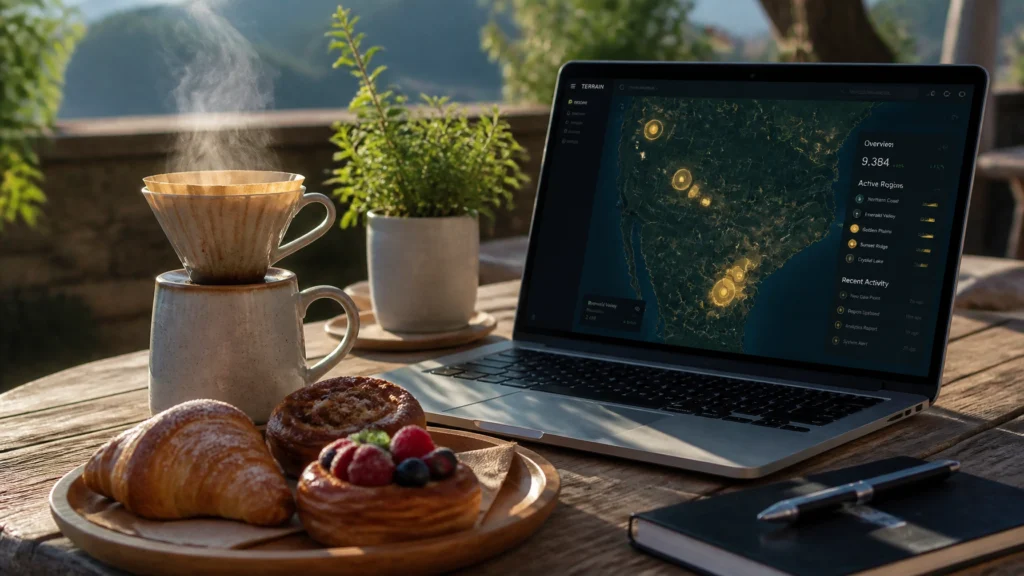
Pull up a chair, grab a fresh cup of coffee, and let’s talk about what’s happening right outside your front door.
If you live in a modern American city or suburban neighborhood, you might assume that your privacy ends roughly where your property line begins. But how often do you stop to consider what’s actually keeping tabs on you as you drive to work, walk the dog, or drop the kids off at school? Most people think of surveillance as a distant concept reserved for spy movies or high-end corporate espionage. The reality, however, is far closer to home.
Every single day, municipal law enforcement agencies across the country deploy an expanding arsenal of high-tech gear. We’re talking about automated license plate readers scanning every car that passes a street corner, facial recognition algorithms sweeping crowds, acoustic gunshot detectors listening in on neighborhood sounds, and soaring drones keeping a watchful eye from above.
The big question is: do you actually know what your local police department is using right now?
If your answer is “not really,” you aren’t alone. For years, the acquisition of police surveillance technology happened behind closed doors, funded by federal grants and approved through quiet city council votes with little public fanfare. But thanks to an extraordinary public-interest resource called the Atlas of Surveillance, the curtain is finally being pulled back.
Let’s dive into what this tool is, how it works, and why knowing what’s watching your neighborhood is the first step toward genuine personal security.
Created by the Electronic Frontier Foundation (EFF) in collaboration with student journalists and researchers at the University of Nevada, Reno, the Atlas of Surveillance is the largest open-source repository of police surveillance technology in the United States.
Think of it as a comprehensive, searchable clearinghouse that maps out thousands of individual surveillance programs across all 50 states. Rather than relying on guesswork or vague rumors, the Atlas aggregates public records, local government documents, news reports, and verified agency disclosures to show exactly which departments are operating specific types of surveillance gear.

When you pull up the database, you aren’t just looking at a generalized list of security trends. You can zero in on your specific city, county, or state law enforcement agency to see a breakdown of the exact hardware and software deployed in your backyard.
What kind of technology does the Atlas track? The list reads like a catalog from a modern intelligence agency:
Seeing these categories laid out in black and white can be jarring. It forces you to realize that public spaces: and even semi-private residential corridors: are increasingly digitized and monitored.
Knowledge is our greatest shield. If you want to find out what technologies are active in your local area, the process is straightforward:
Once you see what’s operating in your community, the picture becomes clear: passive data collection is happening all around us. But recognizing the presence of surveillance is only half the battle. The next step is knowing how to protect your personal privacy in an interconnected world.

Here at FindASpy.com, our core philosophy is simple: staying one step ahead requires a combination of awareness, knowledge, and proactive protection.
When you discover that your local environment is saturated with ALPRs, cameras, and tracking tech, it’s easy to feel overwhelmed. But awareness shouldn’t lead to paralysis; it should inspire preparedness. Just as you lock your doors at night or secure your home Wi-Fi network, safeguarding your personal privacy requires intentional tools and professional vigilance.
If you are concerned about digital privacy breaches, unauthorized tracking, or hidden monitoring devices in your personal life, vehicle, or property, you don’t have to navigate it alone.
Rip Lee reads every single post and comment here at the brunch table, and I want to hear from you.
Grab another sip of coffee and drop a comment below:
Let’s keep the conversation going, stay vigilant, and look out for one another. See you at the next table!

Your vote helps determine FindASpy Insider’s Readers’ Top Picks. One rating is allowed per reader for each article.