

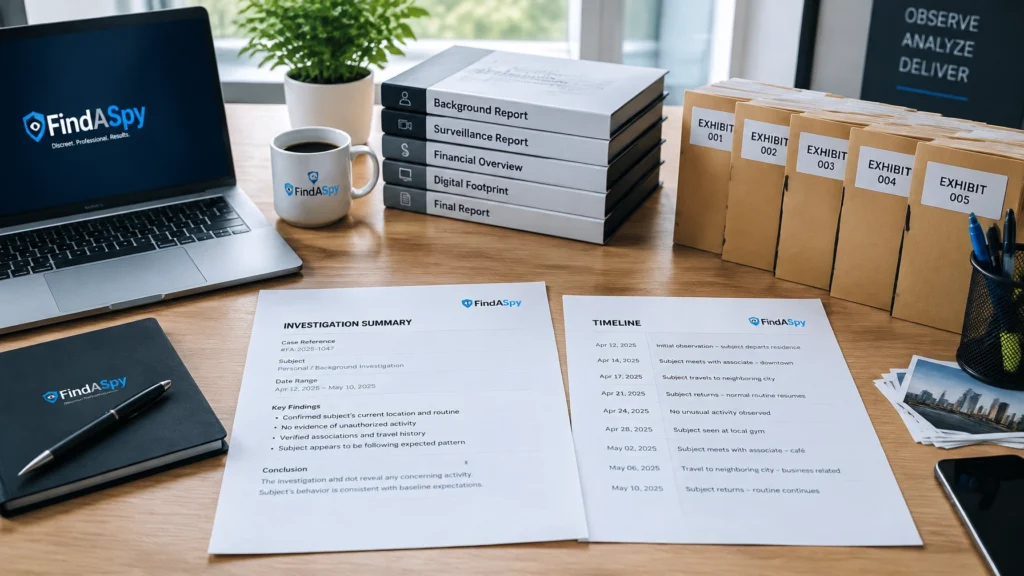
Morning Coffee with Tracer
Awareness and Scam Disclaimer: This article provides general educational information about documenting and reporting scams, breaches, and suspected crimes. It is not legal, investigative, financial, or law-enforcement advice. Procedures vary by agency, state, and country. This content is guidance only. If you are in immediate danger, if a crime is in progress, or if your safety is at risk, stop reading and call 911. Never file a false report.
At FindASpy headquarters, the front-desk guest sign-in tablet has developed a small lesson in human dignity.
The stylus is attached to the counter by a coiled cord exactly two inches too short to reach the signature line. Every visitor must lean sideways, stretch an arm, and bring their face uncomfortably close to the screen. Tracer has watched a retired judge perform the maneuver. He has watched a client attempt it while maintaining the expression of someone who absolutely meant to do that.
Nobody has reported the tablet because it works, technically, if you bend far enough.
Tracer’s coffee this morning is a macchiato from the shop down the street. He finishes it in three sips and immediately regrets the decision.
Then a client arrives. She has reported the same scam to two police agencies. Both times, she says, she left feeling like she was the suspect.
“They looked at me like I was the crazy one.”
Tracer understands the frustration. The problem is not always that law enforcement does not care. Often, the report arrives without the structure, evidence, or jurisdictional information needed to move it forward.
Here is how to change that.
A patrol officer is trained to respond to immediate danger, theft, violence, traffic incidents, and other calls that require fast action. That officer may not have specialized training in financial fraud, account takeovers, digital evidence, or cross-border scams.
Many local agencies do not have a dedicated cybercrime unit. Jurisdiction can also be complicated. The victim may live locally, the bank may be headquartered in another state, the payment platform may be based in another country, and the scammer may be using a stolen identity.
A report with no documents is difficult to investigate. The officer’s practical question is often: What would I investigate first?
Agencies also track performance measures that may include clearance rates, meaning the percentage of cases resolved through an arrest, exceptional clearance, or other recognized outcome. A case with no named subject, transaction trail, phone number, or usable evidence competes poorly with a case that has an identifiable lead.
That does not mean you are not believed. It means the report has not yet become actionable.
Most officers are not hostile. They are often overworked and unequipped for a category of crime that crosses agencies and technologies. Your task is not to convince anyone that you were wronged. Your task is to provide a package so organized that the remaining question is who should investigate it.
The most common mistake is calling before writing anything down. The second is arriving with a phone full of scattered screenshots that nobody can easily review.
Build these four parts first.
Keep it to one page. Include:
One page matters because an officer may read it at a front desk while a radio is sounding and other calls are waiting.
Use a simple format:
Date and time (What happened) Who was involved: Document that proves it
A timeline turns a confusing story into a sequence. It may become the document a detective relies on months later when your memory has faded.
An exhibit list is a numbered list of evidence. For example:
The number should match the evidence. An officer can attach a numbered exhibit list to a report. An officer cannot attach a shoebox.
Organize the documents in the same order as the index. This weekend project may change the entire conversation because it answers many questions before they are asked.
A screenshot is a copy. The original email, message, account log, or file may contain metadata, meaning information about when it was created, where it came from, and how it moved through a system.
Export message threads and emails when the platform allows it. Download transaction records from your bank, payment app, and online account. Keep the originals unchanged.
Do not delete embarrassing messages. Victims often remove the message they misunderstood or the reply they regret. That can damage credibility and make it appear that evidence was concealed.
Keep envelopes, shipping labels, boxes, counterfeit checks, money orders, gift cards, and letters. Do not return evidence to a scammer. Photograph physical items before touching them. If the location matters, photograph the surrounding scene as well.
Chain of custody means keeping a written record of who had an item, when they had it, and where it was stored. Put physical evidence in a sealed bag or envelope with the date, description, and your initials. Keep a simple evidence log.
For every contact, record:
At every stage, leave with a number.
Ask the bank for its fraud case number in writing. Pull statements covering the entire relevant period. Record exact transaction dates, amounts, confirmation numbers, wire details, and payment recipients. The bank’s internal investigation record may become important evidence.
If a phone or computer may contain spyware or malware, do not factory reset it. Do not delete the suspicious application. A reset may destroy the most valuable evidence. A qualified professional should preserve or image the device before it is altered.

Recording laws vary sharply. Florida generally requires the consent of all parties before recording a private communication. Florida Statutes section 934.03 addresses the interception and recording of communications, and unlawful recording can create criminal and civil liability.
If you are unsure, do not record. Consult a licensed attorney before recording a private call or in-person conversation.
Safer alternatives include writing a dated summary immediately after the conversation, sending a follow-up email that says, “To confirm our conversation today, you stated…,” or asking the other person to put the statement in writing.
Recording officers performing duties in a public place may be treated differently in many jurisdictions, but do not assume the law. Confirm the rule where you live or simply take detailed notes.
Store copies in two places. Email important documents to yourself, keep a printed copy, and use a naming system such as:
2026-09-20_Bank_Statement_Exhibit-01
Cloud storage is safer than relying on a single phone that could be lost, damaged, or taken.
If possible, visit in person during normal business hours rather than at midnight on a Saturday. Ask which unit handles fraud, financial crimes, or cybercrime.
Many agencies have a records division, detective bureau, financial crimes unit, or cyber unit. Asking for the correct unit is not rude. It is how a report reaches the right drawer.
Say:
“I would like to file a report for a financial crime. I have a one-page summary, a timeline, and numbered exhibits. I am asking for a report number and for this to be routed to the unit that handles fraud or cybercrime.”
Ask for three things:
If someone is dismissive, stay calm. Do not lecture or threaten. Ask:
“Is there a unit here that handles financial crimes?”
“Can I add this documentation to the report?”
“If I obtain additional evidence, what is the process for submitting it?”
Report truthfully in more than one appropriate place. Different agencies collect different information.
A scam that one agency cannot pursue may be part of a pattern another agency is actively tracking.
An attorney can tell you whether the matter is likely criminal, civil, or both. A civil matter is generally a dispute between people or organizations that may require a demand letter, lawsuit, or other legal remedy. A criminal matter is investigated by the government.
An attorney may also send a formal demand, communicate with institutions, preserve evidence, prepare affidavits, use subpoenas where available in litigation, and explain to an agency why the facts may involve a crime rather than only a contract dispute.
For a small loss, legal fees may exceed the amount recovered. For major losses, business losses, insurance claims, custody or domestic-safety issues, employment matters, or fabricated evidence, legal counsel may be essential. This is not legal advice; consult a licensed attorney in your jurisdiction.
A licensed private investigator gathers facts and documents them within a defined legal scope. FindASpy’s investigative work is carried out by a licensed, insured, and bonded team through E.M. Investigations, Inc.
A professional investigator may provide:
FindASpy services include hidden-device detection, spyware and breach removal, cyber consultation, and the full services overview.
A private investigator cannot make an arrest, compel bank records, access an account, or guarantee that an agency will act. Anyone promising those things is not being honest.
Wait a reasonable period, then contact the assigned detective or unit once. Use the report number. Offer something new: a bank reference, additional exhibit, IC3 confirmation, or updated timeline.
Ask one specific question rather than simply asking for a status update.
If necessary, ask for a supervisor and request the agency’s complaint or review process in writing. Keep submitting new evidence as it arrives. A live, organized file is easier to work than one that has gone stale.
Do not exaggerate, invent details, threaten anyone, publicly accuse a suspect, secretly record private conversations without understanding the law, reset a potentially compromised device, destroy evidence, or send more money to recover the first loss.
Recovery-fee scams commonly follow the original scam. A stranger promising guaranteed recovery for an upfront payment is not your rescuer. It is often the next person in line.
Nobody investigates a story. They investigate a file.
Tracer walks the client to the front desk. She performs the same sideways contortion, arm extended, cord pulled tight, dignity temporarily set aside. Then she signs her name.
The tablet technically accepted her statement. That did not mean it made the process easy.
The same is true of a scam report. A system may accept your complaint without understanding it. Preparation makes the difference between a story that disappears and a file that can be routed, reviewed, and investigated.
But Tracer would tell you this first: the file can wait. The emergency cannot. If someone may be in danger, stop everything else and call 911.
Tracer looks at his macchiato. It is cold now.
He drinks it anyway.
This week:
For Tracer’s Pick, you can enter in through the Community Finds page. Readers can also browse the FindASpy catalog for documentation and security gear. No device replaces organized records, a clear timeline, or lawful reporting.
Community Disclaimer: Do not post passwords, Social Security numbers, bank-account details, private addresses, or identifying evidence about another person. Share only what you are comfortable making public. For an active emergency, contact local authorities directly.
What State are you from? Have you ever reported a scam or breach to law enforcement? What happened when you did? Were you given a report number, referred to another agency, or left without a clear next step?
What is the hardest part of documentation for you: building the timeline, preserving digital evidence, making the first call, or following up?
Tracer reads all posts. To share your own hidden gadget with the community, click here.
Next edition: Tracer examines how scammers use urgency, authority, and familiar voices to make a victim act before thinking.
Final Disclaimer: This article is educational content, not legal, investigative, or law-enforcement advice. Reporting procedures, unit structures, jurisdictional rules, recording laws, and records-retention practices vary by agency, state, and country. Florida readers should verify current Florida law, including Florida Statutes section 934.03, with a licensed Florida attorney before recording any private conversation. Nothing in this article guarantees that a report will be investigated, that an agency will act, that evidence will be accepted, or that any loss will be recovered. Never file a false report. Preserve evidence before touching it, and never destroy a device that may contain evidence. A licensed private investigator cannot make arrests, compel records, or promise an outcome.
Morning Coffee with Tracer
Morning Coffee with Tracer is written to help families, professionals, and communities turn privacy concerns into practical protection, with field-informed guidance from Sterling Reed "Tracer" and the FindASpy team.
Your vote helps determine FindASpy Insider’s Readers’ Top Picks. One rating is allowed per reader for each article.
Today’s Coffee Conversation
Tracer shares cybersecurity stories, scam alerts, privacy tips, and investigative insights. Pull up a chair, share your experience, and help shape tomorrow’s discussion.